Precision-driven automation pipeline AI-powered market insights

Dochodnia: Advanced Automated Trading

Dochodnia delivers a refined overview of next-generation trading automation, spotlighting bot-driven execution flows, configurable governance, and rigorous operational monitoring. The platform centers on clarity, consistency, and seamless access across devices for professionals.

Bank-grade encryption for data protection
Streamlined onboarding and setup
Flexible, investor-grade controls
Multi-asset Unified execution space
Real-time Insightful dashboards
Audit-ready Comprehensive logs

Automation-centric trading capabilities

Dochodnia outlines essential building blocks for automated trading strategies, including AI-assisted decision logic, execution routing, and structured monitoring. Each module is designed for clear, predictable workflows across varying market conditions.

Strategy orchestration hub

A centralized view shows how bot components harmonize data intake, model evaluation, and order intent generation. AI-guided trading assistance aligns rules with user preferences to ensure consistent execution across sessions.

  • Parameter profiles and presets
  • Session-aware scheduling
  • Event-driven state updates

Execution workflow mapping

A clear map of order lifecycles—from intent creation to broker routing and status tracking—focusing on timing, validation, and structured handling for scalable automation.

Lifecycle Create → Route → Track
Controls Limits • Rules • Sessions

Monitoring and diagnostics

Dashboards, logs, and status indicators highlight automation behavior. AI-driven insights help surface anomalies and deliver structured context for review.

Run status Order state Latency notes Audit logs

Configuration controls

Governance summaries cover exposure caps, instrument filters, and session rules that guide automated bots. The emphasis is on clarity and auditable parameter boundaries for dependable operations.

Privacy and data handling

Privacy-focused notes describe secure handling of account and contact data with encryption, strict access controls, and principled retention practices.

How Dochodnia outlines an automated bot workflow

The overview presents a streamlined sequence used by AI-assisted trading bots, from setup to ongoing monitoring. It highlights how AI support informs decision logic and how controls align execution with chosen parameters.

Step 1

Create profile and verify details

Profile creation and region mapping pave the way for follow-up validation. The workflow emphasizes accurate contact verification and consent capture for seamless onboarding.

Step 2

Choose parameters and governance

Parameter selection describes how automated bots apply exposure limits and session rules. AI-assisted tooling helps organize profiles for consistent execution.

Step 3

Track operations and logs

Monitoring guidance emphasizes run status, order state, and event logs for clear oversight. The layout fosters reliable governance of automation.

Step 4

Refine settings through cycles

Iterative reviews, session updates, and checks drive continuous improvement. AI-assisted guidance helps document changes across bot runs with clarity.

Operational snapshots for automation components

These snapshots summarize key categories for automated trading bots and AI-assisted workflows. The cards spotlight monitoring priorities and configuration domains in a concise, desktop-friendly layout.

Workflow stages

A structured view of intake, evaluation, routing, and tracking stages used in automated execution pipelines.

Control domains

Parameter groupings for exposure, session rules, instrument filters, and order constraints aligned with oversight.

Audit readiness

Log categories that support review, including run events, configuration changes, and order lifecycle entries.

Monitoring focus

Dashboard concepts for run status, routing outcomes, and operational telemetry used in bot supervision.

Frequently asked questions

This FAQ encapsulates how Dochodnia presents automation concepts for trading bots and AI-powered assistance. Answers emphasize workflow structure, configuration themes, and monitoring patterns that underpin reliable automated execution.

What does Dochodnia cover?

Dochodnia showcases automated trading bots, AI-assisted components, and the workflow stages that support structured execution. Expect clear configuration domains, monitoring views, and lifecycle logging for robust oversight.

How is AI used in the workflow description?

AI serves as a decision-support layer that can evaluate inputs, align rule sets with parameters, and enrich monitoring context for informed reviews.

Which controls are typically highlighted?

Common controls include exposure caps, instrument filters, session rules, and order constraints to guide automated bots. The emphasis is on auditable boundaries and reusability.

What monitoring elements are described?

Monitoring elements cover run status, order state, event logs, and telemetry notes. Dochodnia presents these in a cohesive view to support ongoing supervision.

How does registration relate to the workflow?

Registration enables account creation, region mapping, and contact validation for follow-up. The onboarding flow is depicted as the initial step that unlocks configuration and monitoring access.

Operational discipline for automated execution

Dochodnia presents disciplined operating practices as a structured approach to configuring and supervising automated trading bots. The tips emphasize regular parameter reviews, session planning, and monitoring routines that align AI-powered assistance with defined controls.

Use a configuration blueprint

A blueprint ensures consistent coverage of exposure limits, session rules, and instrument filters before launches. The approach promotes repeatable setup patterns that keep bot operations aligned with chosen parameters.

Plan session windows

Session planning supports predictable scheduling and focused monitoring. Dochodnia frames session-aware automation as a practical way to align bot actions with defined time boundaries.

Review logs on a fixed cadence

A steady cadence for reviewing run events and configuration changes enables orderly oversight. AI-assisted context helps reviews stay consistent across multiple bot cycles.

Limited-time onboarding window for Dochodnia access

This countdown highlights a brief window to receive Dochodnia access updates and onboarding coordination. Experience a streamlined registration and operational setup for automation-ready workflows.

02 Days
12 Hours
45 Minutes
08 Seconds

Operational risk checklist for automated trading

Dochodnia presents a practical checklist of safeguards used with automated trading bots. The items emphasize configuration boundaries, continuous monitoring, and governance patterns that harmonize AI-assisted trading with defined parameters.

Exposure limits

Define per-instrument and per-session exposure caps to keep execution within intended constraints.

Order constraints

Apply sizing, frequency, and routing rules to preserve consistent automated behavior.

Session governance

Enforce session windows and review checkpoints to maintain orderly bot runs and predictable monitoring.

Configuration review cadence

Maintain a steady rhythm for updating parameters and reviewing outcomes to support disciplined oversight.

Monitoring dashboards

Track run status, route outcomes, and event telemetry in a single, actionable view.

Audit-friendly logging

Maintain structured logs for events and configuration changes to support traceable bot cycles.

Security and certification-oriented practices

Dochodnia highlights secure handling of registration data and operational access. The section emphasizes privacy-first management, granular access controls, and verification workflows that support reliable account operations.

Encryption
Policy alignment
Access controls
Verification flow

Disclaimer

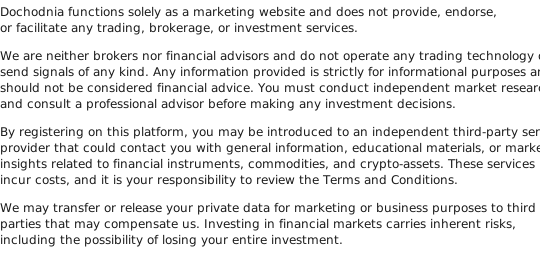
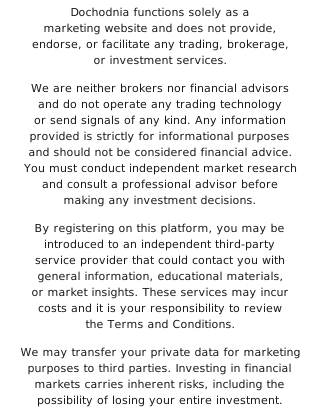
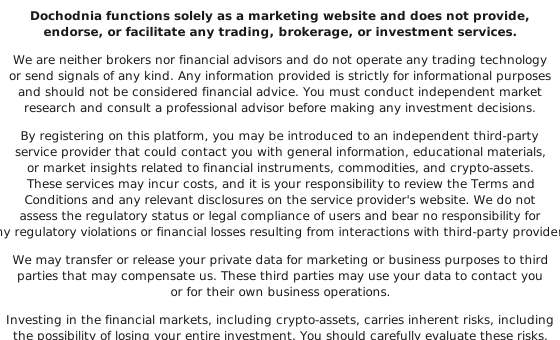
This website functions solely as a marketing platform and does not provide, endorse, or facilitate any trading, brokerage, or investment services.

Read More
Disclaimer Disclaimer